Grading Methods
How GEM examines and grades
Our grading follows internationally recognized terminology. Here is how we describe each category, and how to read the results on your report.

Grading Methods
Our grading follows internationally recognized terminology. Here is how we describe each category, and how to read the results on your report.
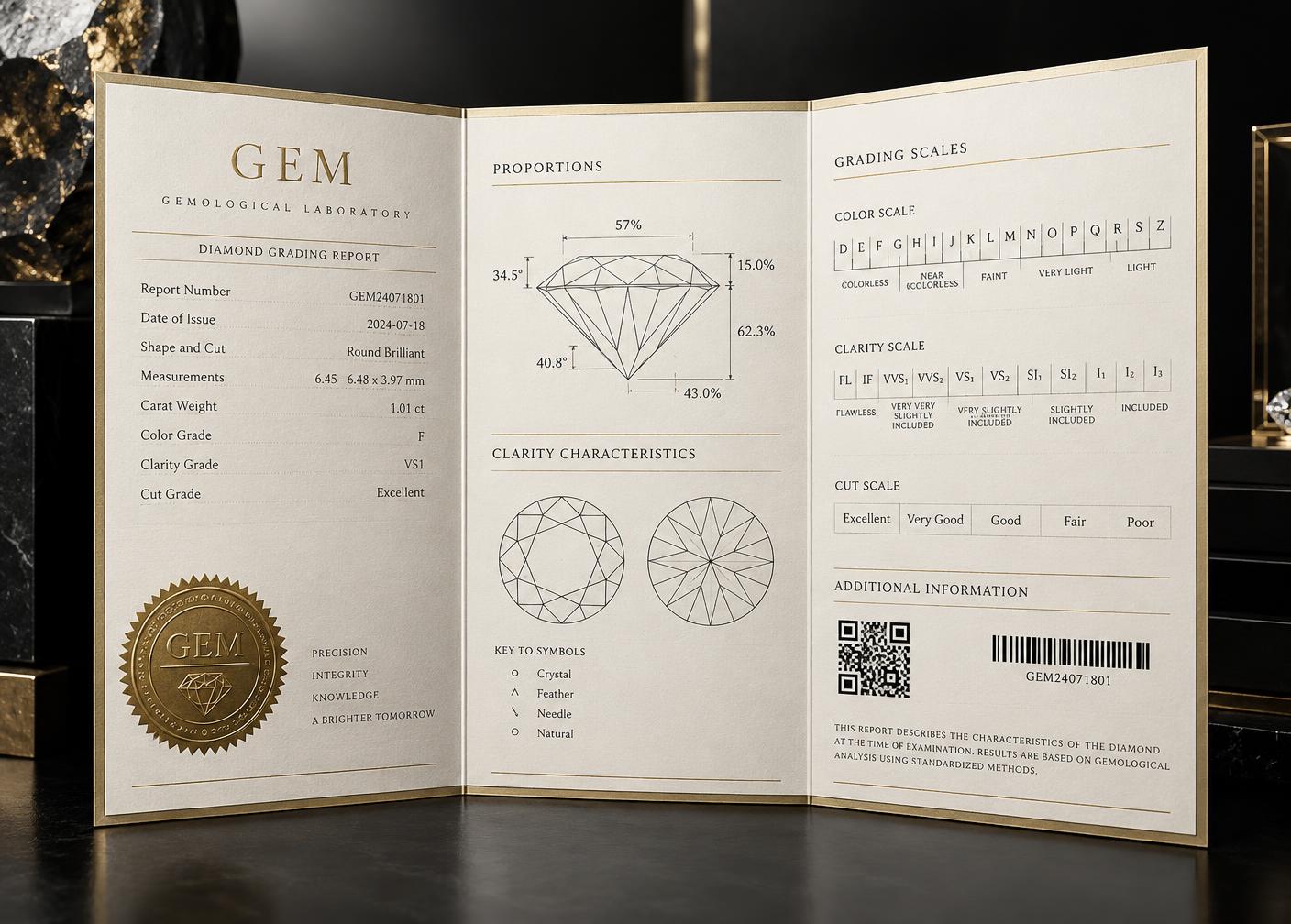
Most diamonds range from colorless to light yellow or brown. We compare each stone with master stones under controlled daylight-balanced lighting and assign a grade from D to Z. Fancy colors such as pink, blue or vivid yellow are described separately.
Clarity describes internal inclusions and surface blemishes seen at 10× magnification. Their size, number, position and visibility determine the grade.
Cut describes how well a diamond's proportions, polish and symmetry return light. For round brilliants we grade from Excellent to Poor; for other shapes we report polish and symmetry.
Measured on a calibrated electronic balance to the hundredth of a carat. One carat is 0.2 grams. Stones set in jewelry are estimated by formula.
The shape describes the outline of the stone; the cutting style describes its facet arrangement.
Every GEM diamond report includes a proportions diagram: table size, crown and pavilion angles, depth, girdle and culet, measured with a proportion scope. Together they decide how the stone handles light.
Laboratory-grown diamonds have the same chemical, physical and optical properties as natural diamonds. They are produced by CVD (chemical vapor deposition) or HPHT (high pressure, high temperature). Only laboratory instruments can tell them apart, and every GEM report states the origin clearly.
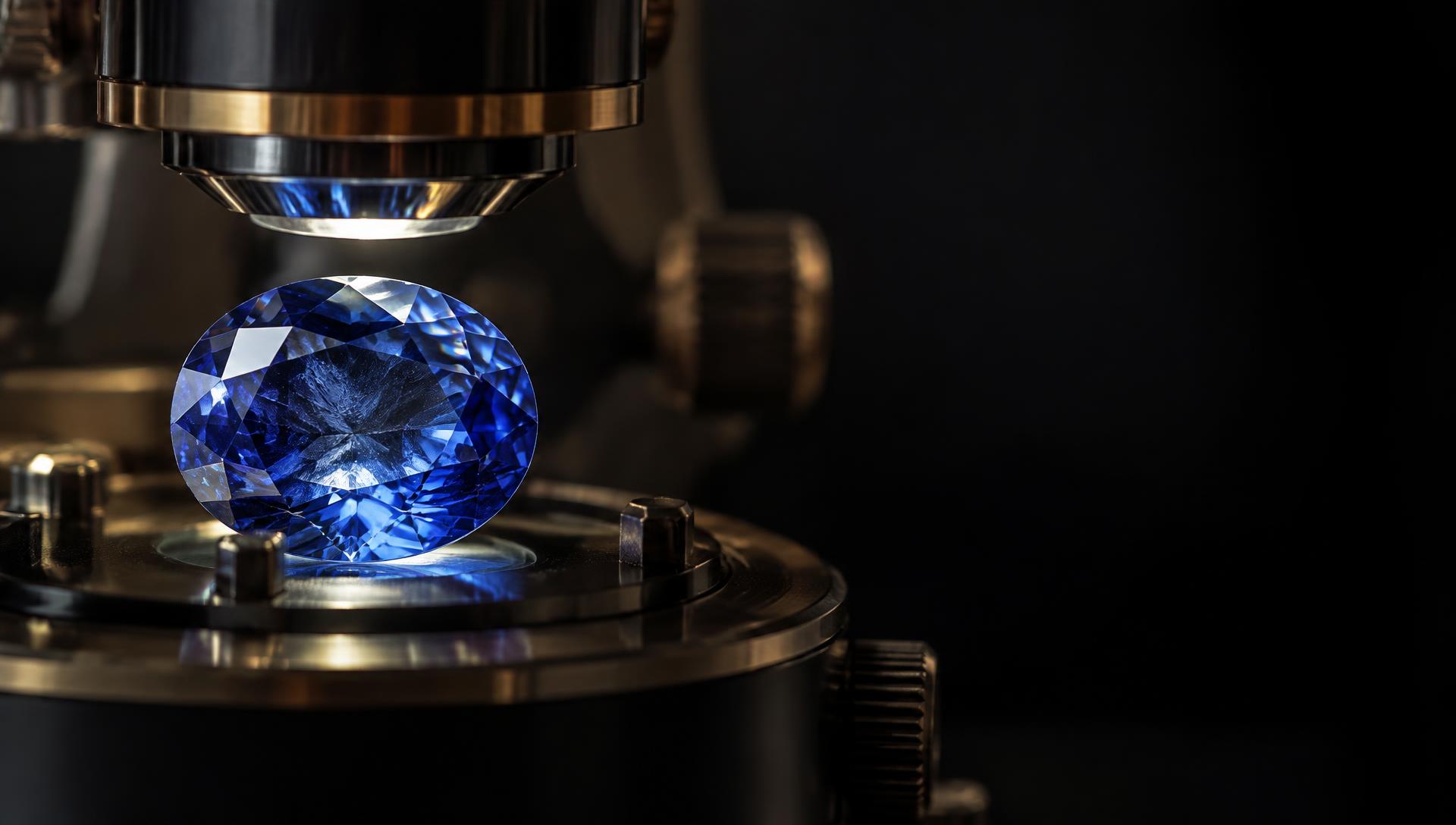
For sapphire, ruby, emerald and other gemstones we identify the species and variety, determine whether the stone is natural, synthetic or an imitation, and disclose any treatment we detect, such as heating, oiling, diffusion or filling.
For a finished piece we verify the metal (by XRF where possible), weigh the piece, describe the center and side stones and estimate the total carat weight as the mounting permits.
The hallmark states the gold or platinum content in parts per thousand.
| Metal | Hallmark | % |
|---|---|---|
| 24K Gold | 999 | 99.9 |
| 22K Gold | 916 | 91.6 |
| 21K Gold | 875 | 87.5 |
| 18K Gold | 750 | 75.0 |
| 14K Gold | 585 | 58.5 |
| 10K Gold | 417 | 41.7 |
| 9K Gold | 375 | 37.5 |
| Platinum | 950 | 95.0 |
| Sterling Silver | 925 | 92.5 |
We open and inspect the movement, check the reference and serial against the production period, measure timekeeping on a timegrapher, test water resistance and examine every component for originality before stating a final result.